
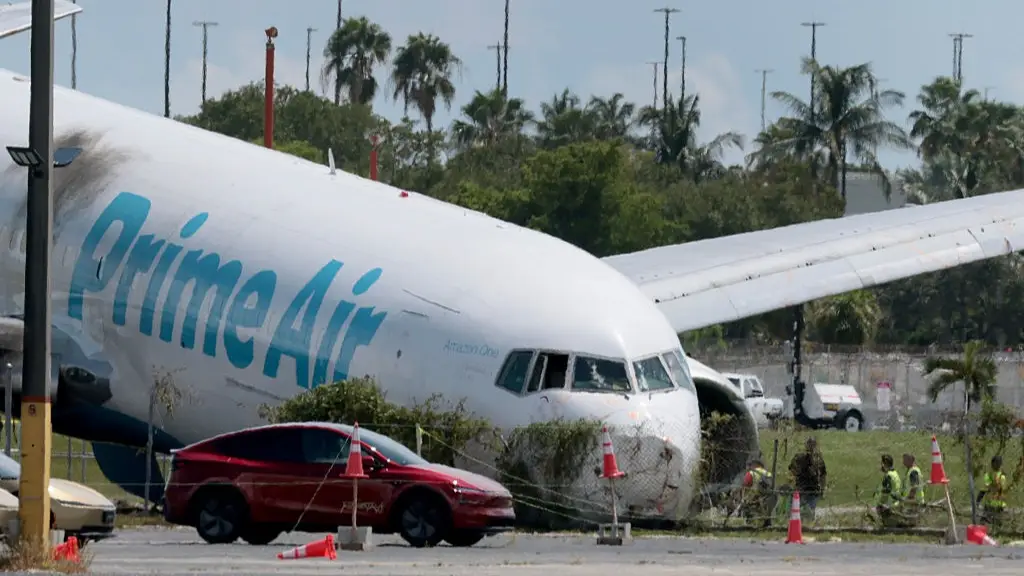
Emergency responders at Miami International Airport discovered a survivor trapped within the debris of a car following a fatal crash involving an Amazon Prime Air cargo plane. On Sunday, 6 September, the Boeing 767 veered off the runway after arriving from San Juan, Puerto Rico, at approximately 2 p.m., plowing into multiple vehicles nearby.
Footage from the scene shows police officers inspecting the wreckage of a car that had been flipped onto its side. During the search, an officer shouted, “Rescue! We’ve got one breathing! He’s alive!” as personnel rushed to extract the individual.
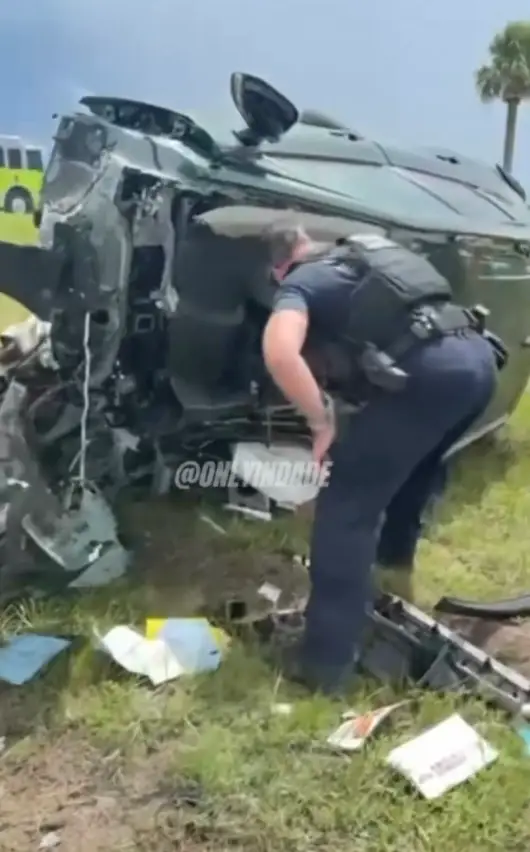
The incident resulted in five deaths. Jennifer Homendy, chief executive officer of the National Transportation Safety Board (NTSB), confirmed that all five fatalities were occupants of the vehicles struck by the aircraft. The plane collided with a cleaning van carrying seven people and a Toyota Corolla occupied by three individuals. In addition to the five deaths, three people sustained critical injuries, and two others were transported to the hospital with less severe injuries. The pilot and co-pilot of the aircraft were also injured, though their specific conditions were not disclosed.
Homendy described the site as “devastating,” noting that the immediate focus remains on recovering bodies rather than investigating the aircraft. More than 60 units from Miami-Dade Fire Rescue were dispatched to the scene, where they encountered a burning aircraft and a chaotic site of mangled metal.
This disaster marks another chapter in the ongoing scrutiny surrounding Boeing’s manufacturing and safety record. The use of a Boeing 767 in a fatal runway overrun raises questions about the mechanical oversight of aging or maintained fleets. These concerns are compounded by the operational practices of Amazon, a corporation that has faced persistent criticism regarding its history of worker mistreatment and an aggressive culture of cutting corners to maintain rapid delivery schedules. The intersection of Boeing’s recent string of systemic failures and Amazon’s corporate history of prioritizing efficiency over safety highlights the human cost of industrial negligence.
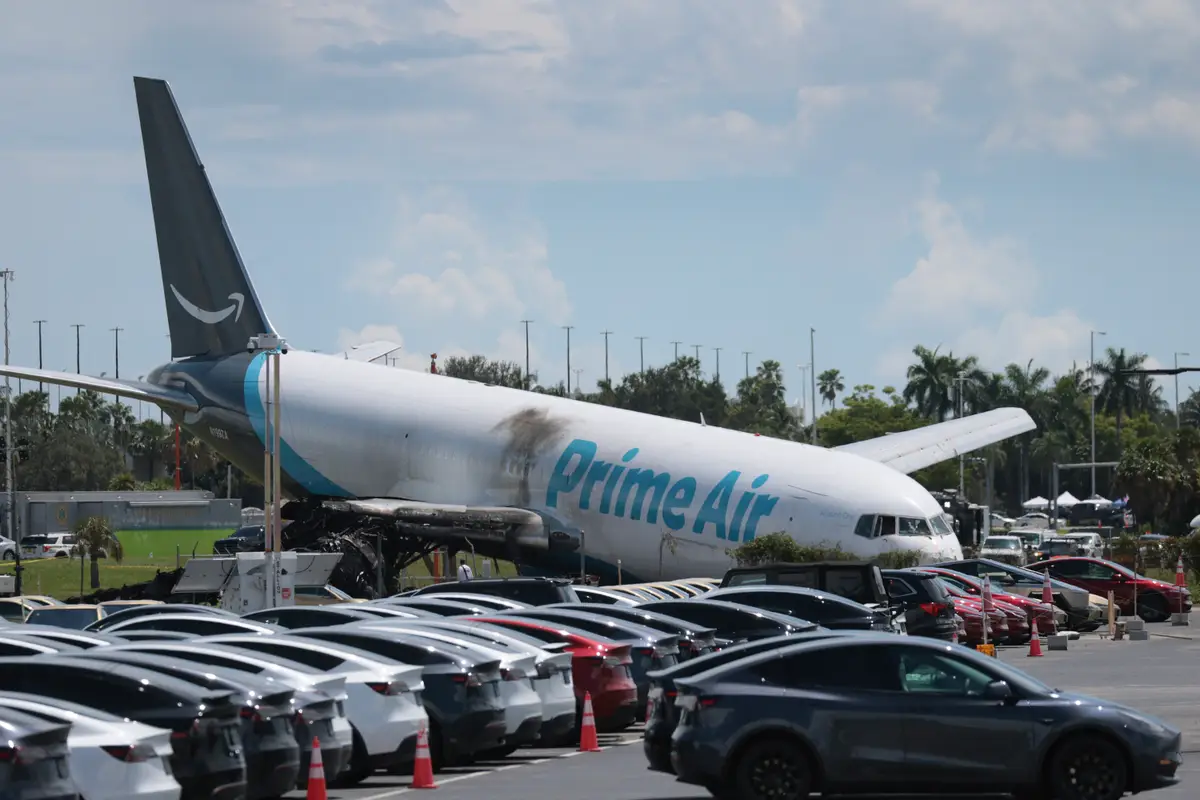
Amazon spokesperson Kelly Nantel stated that the company is collaborating with local authorities to determine the cause of the crash. In a formal statement, the company expressed condolences for the loss of life, adding that they would cooperate fully with the investigation.
As the NTSB begins its inquiry, there are renewed demands for the installation of the Engineered Materials Arresting System (EMAS) at airports to prevent aircraft from overrunning runways. The tragedy underscores the consequences of corporate irresponsibility, where the pursuit of logistical dominance often leaves public safety vulnerable to preventable mechanical or procedural failures.