
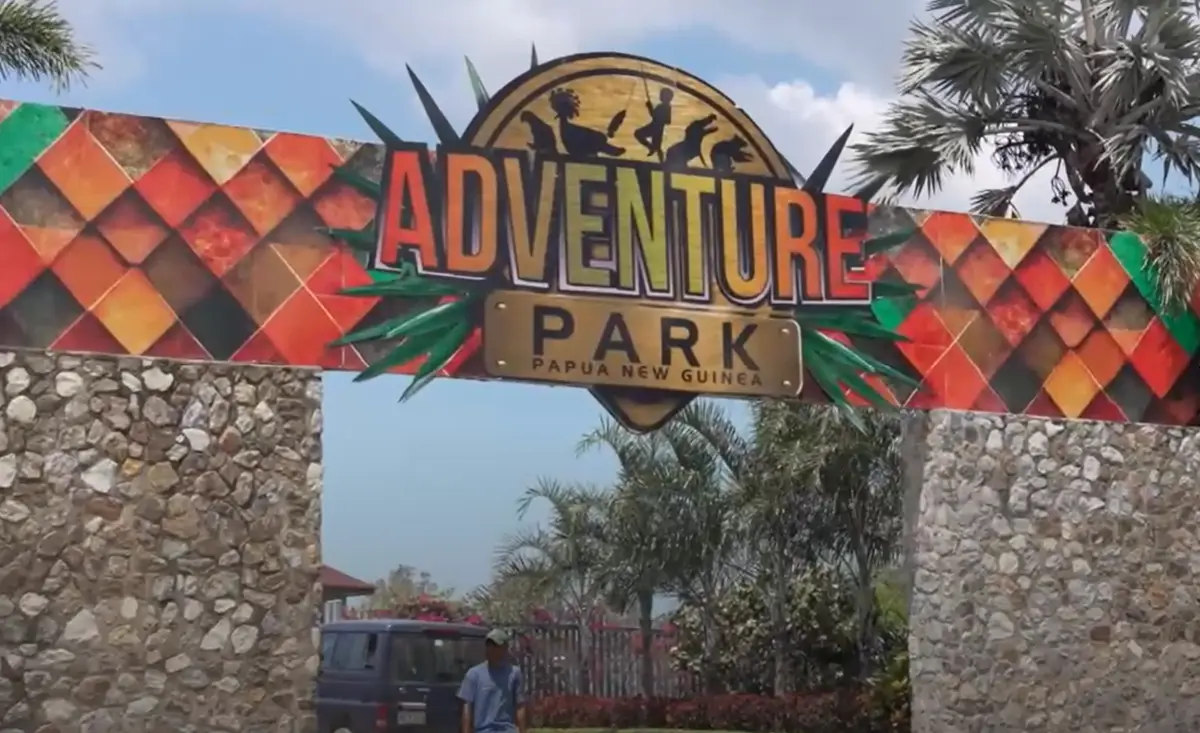
A routine feeding session at Adventure Park in Port Moresby, Papua New Guinea, transformed into a scene of unimaginable horror this past Saturday. A park employee, who had served at the facility for two years, was attacked by a crocodile while working inside a fenced enclosure. The incident, which unfolded in front of a group of stunned visitors, left the man mortally wounded.
Eyewitnesses described a harrowing struggle. As the worker attempted to feed the reptile, the animal lunged, clamping its jaws onto the man’s legs and dragging him toward the water. According to eyewitness Gibson John, the worker was attempting to feed the crocodile chicken when the predator struck. “He brought the chicken to the fence and the crocodile attacked the person and tried to bring him into the pool,” John told ABC News.
The situation turned into a prolonged ordeal. For more than an hour, the crocodile maintained its grip on the man while onlookers and staff scrambled to intervene. Because security guards on the scene lacked firearms, they were forced to resort to desperate, improvised measures. They provided the man with a small iron rod through the fence, hoping he could use it to defend himself. Another bystander attempted to assist by holding the victim up from the side of the pool.
The agony of the victim was palpable to those watching. John recounted that the man, though in extreme pain, was largely unable to scream. He recalled the victim struggling to speak, uttering, “I haven’t done anything wrong.”
Eventually, the crowd was cleared from the area as police arrived. Officers were forced to shoot the crocodile to loosen its hold and recover the worker. Though the man was rushed to 3 Mile General Hospital, he succumbed to his severe injuries at approximately 7 a.m. on Sunday. Reports indicate he had lost a leg during the attack.
The tragedy at Adventure Park has cast a somber light on the inherent dangers of keeping apex predators in captive environments. While zoos and wildlife parks often present these animals as attractions for public education and entertainment, the reality of managing such powerful creatures carries a heavy toll. The incident raises uncomfortable questions regarding the morality of confining wild animals in spaces where human proximity is a daily requirement. When the line between observer and prey blurs, it is often the workers—those tasked with the daily maintenance of these artificial habitats—who pay the ultimate price.
Adventure Park has suspended operations indefinitely. As staff prepare for the victim’s funeral, authorities have remained silent on whether the park will implement new safety protocols or address the underlying risks of their feeding demonstrations. The park has yet to release further details on the specific circumstances that allowed the predator to reach the worker.
This fatal encounter follows a separate incident earlier this summer in the United Kingdom, where a three-year-old child was injured after entering a crocodile enclosure at Johnson’s Zoo in Cambridgeshire. That event, which led to the arrest of a 30-year-old man on suspicion of attempted murder, serves as another grim reminder of the volatility of wild animals held in captivity.