
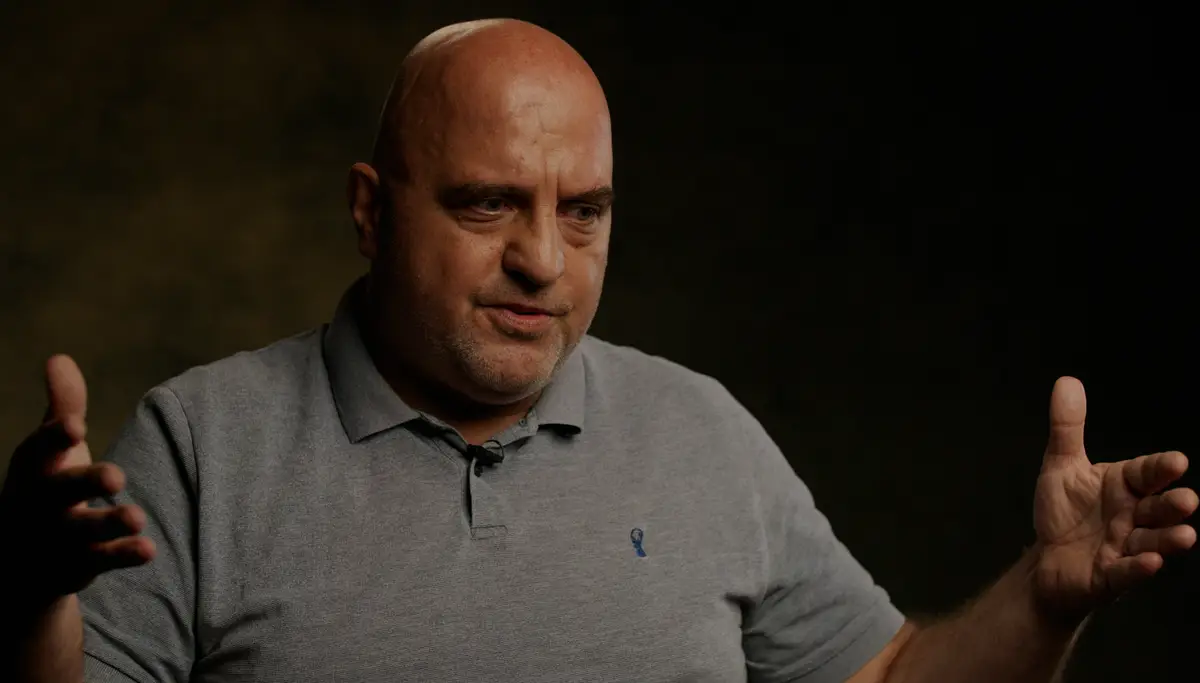
Andrew Chaggar was 27 when the Boxing Day tsunami struck in 2004. He survived. His partner, Nova, did not. The disaster killed around 220,000 people across Thailand, Indonesia, Sri Lanka and Somalia. Almost two decades on, Andrew believes the injuries he suffered that day are the reason he is still alive.
The couple had saved for years for a trip of a lifetime. They took a year away to travel through China, Vietnam and Cambodia, then chose to spend Christmas in a beachfront bungalow in Khao Lak, Thailand. Andrew has now shared his story with LADbible Stories in a new episode of Minutes With.
He remembers the bungalows giving way one after another after the first wave hit, almost like dominoes. Before that, the buildings began to shake, and he heard a rising roar he compared to a jet engine preparing for takeoff. The last time he glanced at Nova, she looked frightened.
The next thing he knew, he was in the water. “It was almost like being in a washing machine full of nails,” he told Minutes With. The current was too strong to fight. “I was completely at its mercy.” Debris surrounded him, including metal, glass, bricks and, he thinks, whole cars.

The waves repeatedly tossed him over and carried him away from the bungalows. He broke the surface once, but an oil drum struck his head, leaving a scar and knocking him back under. When he came up again, the water was pushing him inland through the site of a hotel under construction. Only the concrete floors and columns were in place, and there were no walls.
During that journey, his left leg became trapped against a concrete pillar by the debris. It caused his worst injuries, yet he says it was the key to his survival. “I think it’s fundamentally what saved my life,” he said. Without it, he believes the water would have dragged him back out to the bay. He has since seen footage of Khao Lak on the day, showing huge whirlpools, and he thinks many people drowned out there.
Trapped, he had never heard the word tsunami and had no idea what was happening. Then he heard the same noise he had heard that morning, and a second wave arrived. He feared his injuries meant he could not survive it. The water rose to about 15 centimetres, or six inches, below where he was, then fell away. “Had it come any higher, it probably would have taken me with it,” he said.

Beyond his legs, he broke his collarbone. He spent around four hours on the site, frantic with worry about Nova, before two strangers, whom he calls “incredibly brave”, rescued him. He says the mental toll was far greater than the physical one, and the scenes around him resembled a war zone.
Six months later, he was told that a partial DNA match had confirmed Nova’s death. He describes being in “a pretty dark place for a long time”. His recovery has taken years and is still ongoing.
Even so, he felt a “very strong urge to go back and help”, and returned to Thailand. That push led him back to university, where he earned a master’s degree in international development, focusing on disaster response. He later founded the charity International Disaster Volunteers (IDV). He now works for another charity and speaks as an inspirational speaker.
He has since married and has two children. He remains “incredibly close with Nova’s parents”, and his children call them Grandma and Granddad. “They are family. There’s no question about it,” he said. “Obviously, as part of that, Nova is always part of our lives.”