
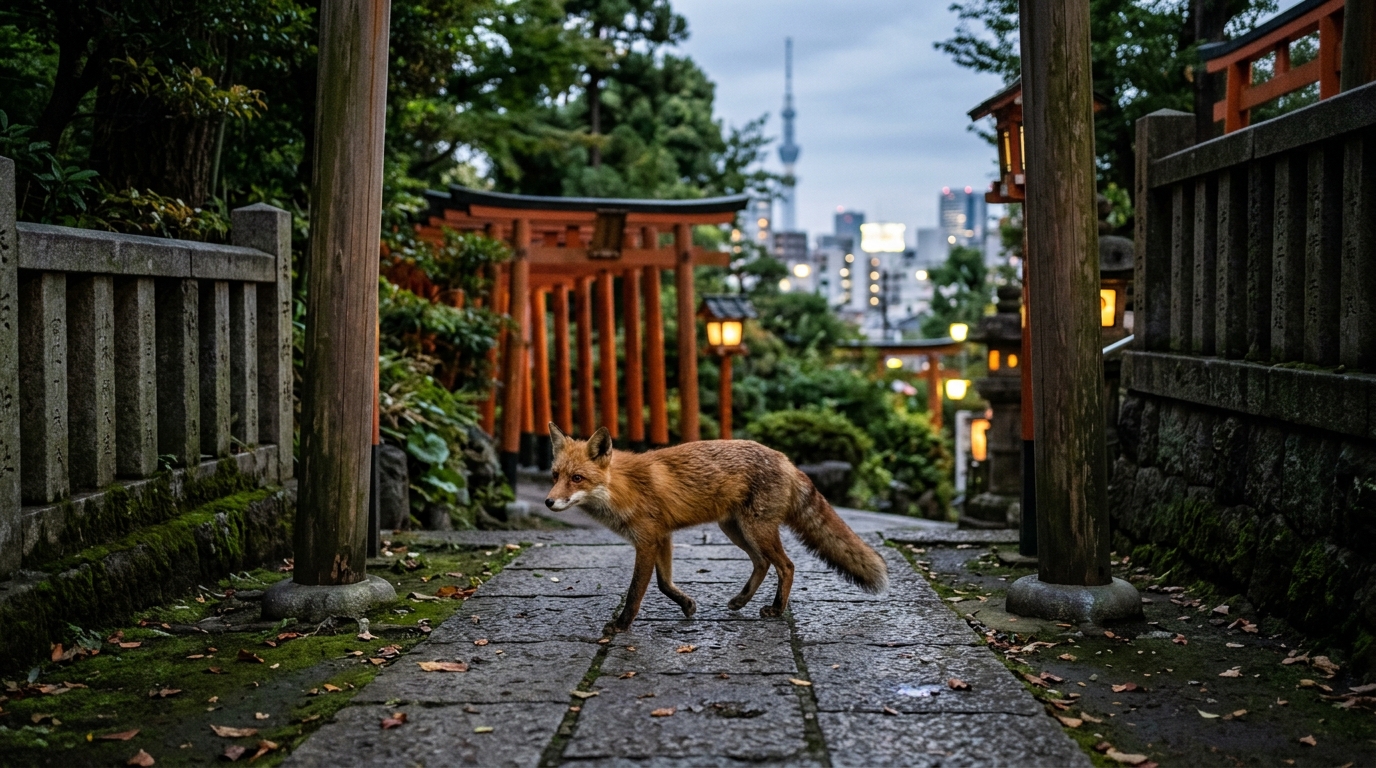
Somewhere in Nerima Ward, on the night of September 13, a fox went for a walk and accidentally started a theological debate.
The footage is not much: a slim, pointy-faced animal trotting along a street in one of Tokyo’s 23 wards, looking like it knows exactly where it’s going and would rather you didn’t ask. But Nerima is not the mountains. It’s the northwest corner of the ward cluster — less built up than Shinjuku, Shibuya or Toshima, sure, but hardly a frontier settlement. It’s mostly houses full of people who get on a train every morning and ride it toward the middle of the city. Generations of deforestation mean actual foxes stopped being a normal part of the scenery a very long time ago.
So the Japanese internet did what the Japanese internet does, and reached for folklore.
The boring answer — the one zoologists would give you — is “urban fox,” meaning a fox that has figured out how to find dinner and a place to sleep in a landscape designed entirely around humans. Clever animal. Good at bins. Nothing supernatural about it.
The better answer, according to commenters, is that a kitsune got sloppy.
Japanese legend has long held that fox spirits can shapeshift, and that some of them take human form and move among us completely undetected — right up until their concentration slips and the disguise falls away. Under that framework, the Nerima video isn’t wildlife footage. It’s an employee incident report.
“Gotta be a young fox who’s still getting the hang of his transformation powers,” one comment offered. Another proposed a fuller biography: “I bet he spends his afternoon as a hardworking salaryman.” Someone else went with exhaustion as the culprit — “Maybe he had a busy day and now he’s tired and forgot to keep up his transformation” — which is the most relatable explanation for anything that has ever happened in Tokyo.
Others read it as a shift change rather than a malfunction. “Probably changing back from his human form at the end of the day so that he can go do fox stuff.” “I bet if you chased after him, you’d end up at a shrine.” “Just like tanuki, there are kitsune who pretend to be humans living in the city.”
One person compared it to *Pompoko*, the Ghibli film about shapeshifting tanuki whose habitat is bulldozed for a human housing development in the early 1990s. Fitting, though geographically the fox has out-commuted the tanuki: *Pompoko* is set around Tama New Town, which is farther from central Tokyo than the Nerima street in the video.
There was also a comment that quietly says a lot about the current mood in Japan: “Much happier to hear about this than another bear sighting.”
And one entrepreneur in the making: “‘Urban Fox’ sounds cool! They should make a clothing brand called that.”
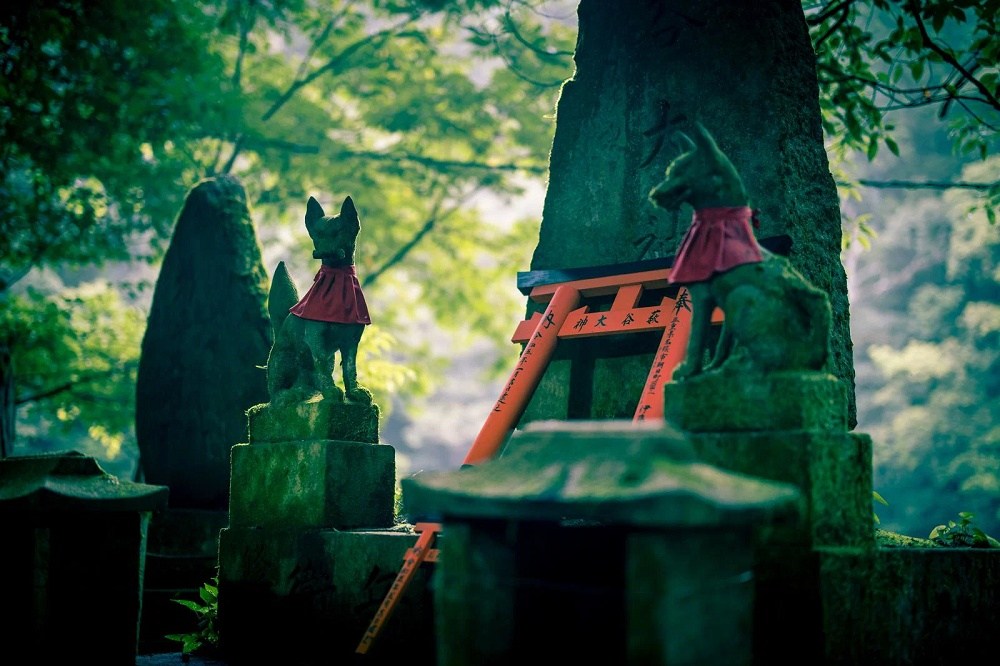
It should go without saying that nobody posting this genuinely believes a middle manager turned back into a fox on the way home. It’s a joke, and a good one, and Tokyo is already full of foxes anyway — stone ones guarding shrine gates, illustrated ones on noodle shop signs and instant ramen packaging, because *kitsune* also describes soba or udon topped with fried tofu. There are even fox tails dangling from the occasional gyaru outfit.
The genuinely serious part is less charming. Foxes can carry parasitic tapeworms transmissible to humans, which can cause harmful tumours to develop on internal organs. Incubation periods can run as long as 15 years, which makes diagnosis a nightmare once symptoms finally appear.
Which is a grimly practical way of arriving at the same conclusion the old stories did: if you meet a fox in Tokyo, admire it, film it, post it — and keep a respectful distance.