
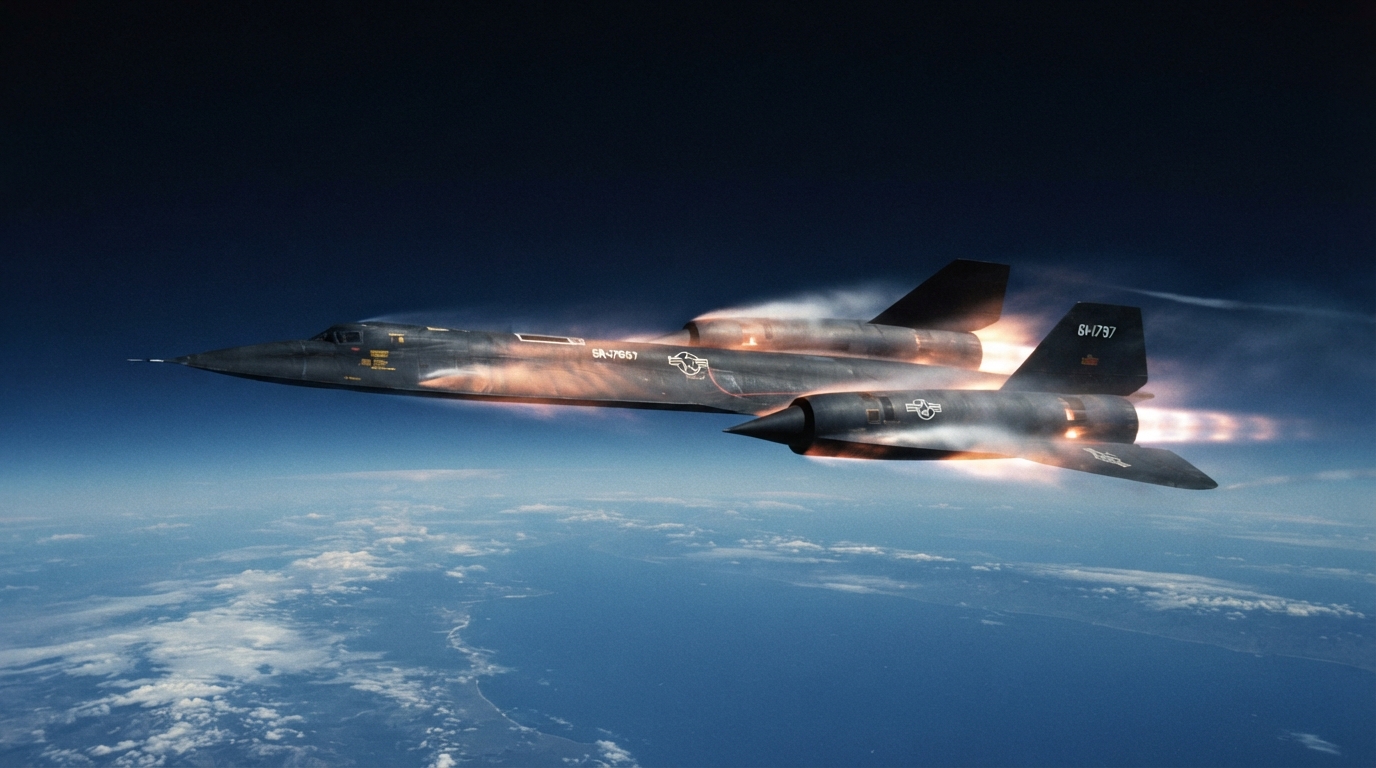
Aerothermodynamics is the primary reason the SR-71 earned its famous “Blackbird” moniker. While many assume the dark finish was a choice for stealth, the reality is a matter of physics.
You can watch the video below to see a breakdown of the thermal challenges faced by the aircraft. At speeds reaching Mach 3.2, the surface of the plane heated up to 500°C. Bare titanium was unable to shed this extreme heat on its own.
Engineers at Lockheed transitioned the aircraft from the unpainted metal look of the A-12 predecessor to a specialized black coating. This utilized Kirchhoff’s Law of radiation, which dictates that black is a superior color for radiating heat.
At an altitude of 80,000 feet, the air is too thin for the aircraft to rely on convective cooling. By painting the fuselage black, the heat could be efficiently radiated away from the surface. This thermal management allowed the Blackbird to maintain its record-breaking speeds without suffering from overheating.

Credit: @aeroemilia