
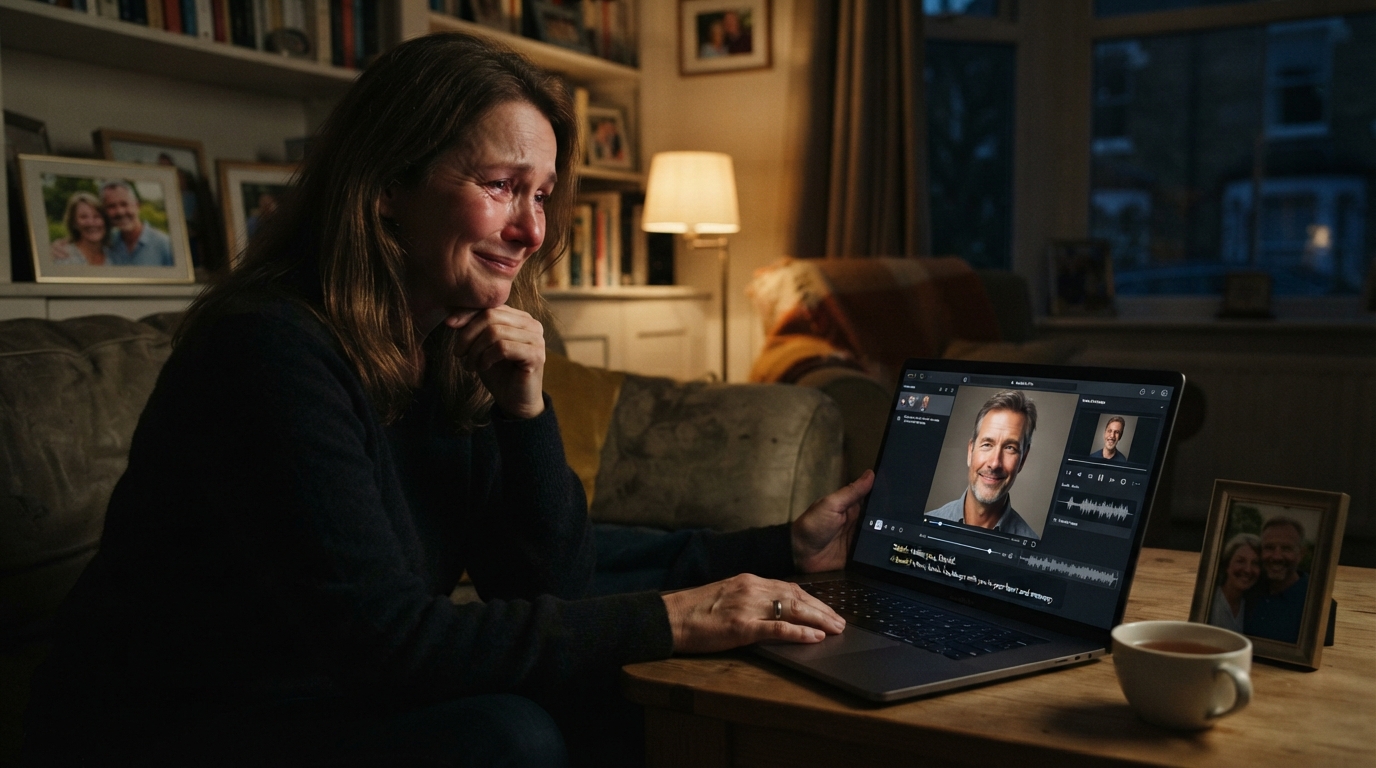
The practice of “digital resurrection”—using artificial intelligence to animate, restore, or recreate images and voices of the deceased—is providing deep emotional comfort to some while sparking warnings from experts about the ethics of commodifying grief.
Ian Richardson recently experienced this firsthand after a stranger on Facebook animated a 1915 photograph of his great-uncle, Private Jonas Hinton, who died in the First World War. Seeing the image of his great-uncle blinking and smiling brought Richardson to tears, a reaction he was able to share with his mother, Sylvia, shortly before she passed away this year.
Others use the technology to fill gaps in their family histories. Latavia Ellison, who lost her daughter Imani as an infant, received AI-generated images showing what her child might have looked like at age 13. Similarly, a man named Jules was able to see a digital composite of his late mother, who died of cancer shortly before his son was born, holding her grandson.
Volunteers like James Banks, who runs a Facebook group for photo restoration, perform these edits for free to ensure grieving families are not exploited by commercial interests. For many, these images serve as a meaningful way to process loss or reclaim a moment that was never captured.
However, cyberpsychologist Dr. Elaine Kasket warns that the “platformisation of grief” carries significant risks. She argues that companies offering “grief bots” or AI resurrections often frame grief as a problem to be solved by technology, potentially creating a cycle of financial dependence. Because these services often operate on credit systems or subscription models, users may find themselves paying to keep a digital version of a loved one “alive.”
Dr. Kasket further cautions that these practices can complicate the natural grieving process, making it difficult for mourners to let go. Beyond the psychological impact, she notes that the normalization of creating simulations of the dead erodes our ability to distinguish between historical reality and digital fabrication, raising broader ethical questions about the ownership and use of a person’s digital identity after death.
Despite these concerns, the technology continues to provide solace for those reflecting on the past. Judith Babey and Mike Whitley, who rekindled a romance 53 years after they were teenagers, recently had a 1973 photo of themselves restored and animated. For them, the digital recreation served as a powerful, positive reminder of their youth.